Weekly Video Updates

Education is power when it comes to planning your largest purchase or sale of an asset. We believe that as a fiduciary it is our responsibility to have the heart of a teacher and truly advise clients from a fiduciary point of view. We provide bi-weekly educational content that can help you better understand the local market and plan for your move! We have the heart of teachers and we LOVE educating on real estate.

Get educated with Steve LaMothe

Steve and the entire Elevate staff belive in delivering an different kind of real estate experience. Knowledge is power, knowledge can give you an advantage and knowledge is the best way to arm yourself to ensure that your purchase or sale goes as smooth as possible! We offer bi-weekly free educational videos and quarterly live events for FREE to make sure that our clients/future clients get free education. Come get educated by one of the premier real estate investors/agents in the country.

Live interview with Steve LaMothe and Armstrong & Getty on Talk 650

Steve LaMothe and Tom Sullivan discuss the real estate market and the NAR settlement on KFBK

By Steve LaMothe September 9, 2026
Higher mortgage rates in 2026: How Folsom buyers and sellers are still winning
By Steve LaMothe September 8, 2026
Homes in top condition sell faster, close more reliably, and net more. Here are the three reasons strategic repairs pay for themselves, plus how we make it effortless. Getting ready to sell is one of the most common times sellers ask me whether the repairs are really worth it. My answer is always the same: yes, and it's one of the highest-return decisions you'll make. Let me break down the three reasons why getting your home into the best possible condition pays off, and how we make that process effortless at Elevate Realty Group, putting more money in your pocket without costing you anything extra compared to the traditional way of selling. 1. It makes sure your home actually sells. In today's market, a significant number of homes coming up for sale, I'd estimate around a third of what I'm seeing, run into trouble. They sit, they cut their price, sometimes more than once, because they're not in good condition. Buyers scroll right past them, or worse, walk through and leave unimpressed. The first job of prepping your home is simply making sure it sells at all so you can actually hit your goals, instead of becoming one of the listings that lingers. 2. It increases the odds you actually close. Getting an offer isn't the finish line. A meaningful share of accepted offers still fall through before closing, and one of the most common reasons is repairs. Picture it: your home hits the market, three weeks later you get an offer, you're thrilled, you accept, and then the buyer's inspection turns up repair issues. Now you're in a fight over who fixes what, and the buyer walks. When you handle those repairs upfront, you eliminate the buyer's apprehension before it starts. There's nothing for them to ask for, no secondary negotiation, no inspection surprise to blow up the deal. It's simply a cleaner way to sell, and it dramatically raises the odds that the offer you accept is the offer that closes. " Skipping repairs feels like saving money, but you end up paying three, four, or five times as much in a lower sale price. " 3. It increases your return on the sale. Think about the math. If it costs you five or six percent to sell your home, and I can come in and help increase your home's market value by six, ten, even fifteen percent through strategic repairs, I've just given you the ability to offset your entire cost to sell and put more money in your pocket on top of it. That's the win I'm after, where the increased value covers your costs and then some, so it's almost like you're not paying to sell at all. I can comfortably say that in my experience, we've never had a seller make strategic repairs and not get that money back with a return. It just makes sense when you think about it. If you were selling a car, you wouldn't take it to the dealer filthy and undetailed and expect top dollar. A home is no different, only the stakes are much higher. Buyers have a feeling when they walk through a home. If that feeling is off, because it's not clean, it needs work, it isn't staged, that feeling never turns into the emotion that makes someone want to buy. But when a buyer walks in and thinks, "Wow, this home is in incredible condition, I wouldn't have to do a thing," that's the emotional response that leads to an offer. If the floor plan works and the home works, they're far more inclined to act. So don't talk yourself into being cheap here and assume that skipping the repairs saves you money, because in reality it does the opposite. You end up paying three, four, or five times as much in the form of a lower sale price, because buyers simply won't pay a strong price for a home that needs work. Getting your home ready is one of the smartest financial moves you can make as a seller. That's exactly why we offer free consultations through our concierge program. We'll come out, look at your home, and tell you the exact return on any repairs at no cost to you. We can cover the cost of the work so you're not paying anything out of pocket. Call or text me at (916) 862-5463 , email me at Steve@homesbyelevate.com , or visit homesbyelevate.com . Let's find out what your home could really be worth.

By Steve LaMothe August 29, 2026
Making the argument to renovate & fix your home before selling.
By Steve LaMothe August 25, 2026
Waiting for rates to drop sounds logical, until you think through what actually happens when they do. Here's the real trade-off, from someone who just lived it. It's the million-dollar question facing Sacramento homeowners right now: is it a good time to move, or should you wait? I've been hearing it constantly ever since interest rates started climbing, and I understand exactly why. If you're sitting on a 2% or 3% interest rate, it's genuinely hard to justify leaving it behind for a new home, especially when you look at what that move would cost you every month. So let me answer this the most honest way I know how, because I just went through it myself. 1. Start with one question: will you still be here in five years? It's what I ask everyone who's weighing this. Picture a family with two kids in a three-bedroom. You're making it work right now, but you already know that in five years, as the kids get older, you're going to need that fourth bedroom. I don't think it's worthwhile to stay in a home that isn't working for you, or in an area you don't really want to be in, just hoping interest rates might come down someday. And here's a piece people forget: if you buy today at a higher rate, you can always refinance later at a fairly low cost and lock in the savings then. The rate you buy at isn't necessarily the rate you keep. 2. The "just wait" logic has a catch. Imagine rates actually drop a couple of points. What happens next? I'd imagine you'd see a flood of new demand and activity hit the market all at once, and it would become far more competitive to buy. Suddenly you've got a lot more people competing over what's probably a smaller pool of homes. So even though lower rates feel like the obvious better time, that timing could actually make it harder to land the right house. It's a real trade-off, and you have to weigh the pluses and minuses honestly rather than assuming waiting wins. " I don't think it's worthwhile to stay in a home that isn't working for you just hoping interest rates might come down someday. " 3. Here's my own story. My wife and I and our kids had been thinking about moving for a while. We love our house and we love our neighborhood, but we knew this home wasn't going to be the right fit as our kids got older. Over the last two or three years, we found a couple of houses that would have worked, and we talked ourselves out of each one, because rates were higher and it was more expensive. That lingering feeling never went away though, the sense that a certain kind of home would just fit our family better. After two and a half years of going back and forth, we finally decided to rip the band-aid off, because we knew we'd move eventually, our kids were getting older, and we'd rather get them settled into a new school now than later. You reach a point where you simply can't wait anymore. 4. I'll be honest about how it went. I think that's more useful than pretending. Even for me, someone who has done this professionally for 16 years and is an investor at heart, it was a lot. I left my 2.7% interest rate for a 6% rate in today's environment. The process, even though it went smoothly and I used one of our own agents, was all-consuming and genuinely stressful. I took a week off work. For those days, every waking moment was the move. I'm telling you not to scare you off, but so you know I'm not handing you advice I haven't lived. I made this exact decision, eyes open, because I knew we'd have to move eventually, and I believe down the road it may well pay off for us. That's my real-world take on the question so many Sacramento homeowners are asking right now. It's more expensive to live where we are now because of the higher rate, that's just true. But the right home, in the right place, at the right stage of your family's life, is worth thinking about beyond the interest rate alone. If you're wrestling with this same decision and you want to talk it through with someone who has actually been in your shoes, I'm here to help. Call or text me at (916) 862-5463 , email me at Steve@homesbyelevate.com , or visit homesbyelevate.com . Let's figure out what actually makes sense for you
By Steve LaMothe August 10, 2026
Inventory is climbing, sellers are cutting prices, and buyers are winning negotiations again. Here's why the data says now is the window. It's been a long time since I've been able to say this, but today we're going to talk about why this might be the best time to buy a home in the last three years. Let's break it down. We've talked about it before this year. We're seeing more inventory on the market. Homes are taking a little longer to sell. That trend is continuing, and the data we're starting to see is compounding. Here's what it means. Inventory is climbing We've seen about 30% to 35% more homes on the market this year versus last year. That is great news. That means we're almost back to pre-pandemic levels in terms of how many homes are available for sale. For buyers, more inventory means more choices, more time to make decisions, and less of that frantic pressure that's defined the market since 2020. For the first time in years, you're not walking into every showing wondering if five other buyers already made an offer. Pending sales are dropping At the same time, we've started to see pending sales, the number of homes actually going under contract, decreasing substantially month over month. Especially over the last 60 days, that drop has been significant. When you combine those two things, fewer homes selling as quickly and more homes coming available, the math starts working in the buyer's favor in a way we simply haven't seen in a long time. " We are definitely starting to see deals pop up. Buyers are getting offers accepted well below asking price. This is not something we've consistently seen in the last three years. " Deals are popping up again This is the part that gets me excited. We are definitely starting to see deals pop up. Sellers are reducing their prices to compete against other sellers. Our buyers are getting offers accepted well below the asking price. This is just not something we've consistently seen in the last three years. Most of the time over the past few years, we've had to submit offers against multiple other buyers or come in with really high offers just to get sellers to accept them. That dynamic is shifting. Buyers are getting breathing room, negotiating power, and results that were unthinkable 18 months ago. My bold claim So in my opinion, and I'll go out and make a bold claim, this really has been the best time to buy a home in the last three years, especially post-pandemic. If you've been on the fence, considering it, or been worried about whether you can afford to buy, it might be worth exploring the numbers and just looking at it. We can break it down for you. If you need to save for a year, we can build a purchase plan for how to save money to buy a house in a year. What about sellers? Our sellers may not be excited about this news, but owners and sellers have been in the driver's seat for six years total. They're still getting good prices. Prices are not coming down substantially. But I would not be surprised if this year you see home values go down maybe 1% to 5%. All the trends are pointing to buyers getting some power back in the market, and that is fabulous news for anyone who's been waiting. If you've been considering buying, reach out. Call me at (916) 862-5463 , email me at Steve@homesbyelevate.com , or visit homesbyelevate.com . We'd be happy to put a purchase plan together for you for free, whether you're ready to buy now or you want to build a plan to get there in the next year.
By Steve LaMothe August 3, 2026
This is a subtitle for your new post
By Steve LaMothe July 16, 2026
Folsom homes feel out of reach, but they don't have to be. See how first-time buyer programs, low-down-payment loans, and house hacking make it affordable.
By Steve LaMothe July 15, 2026
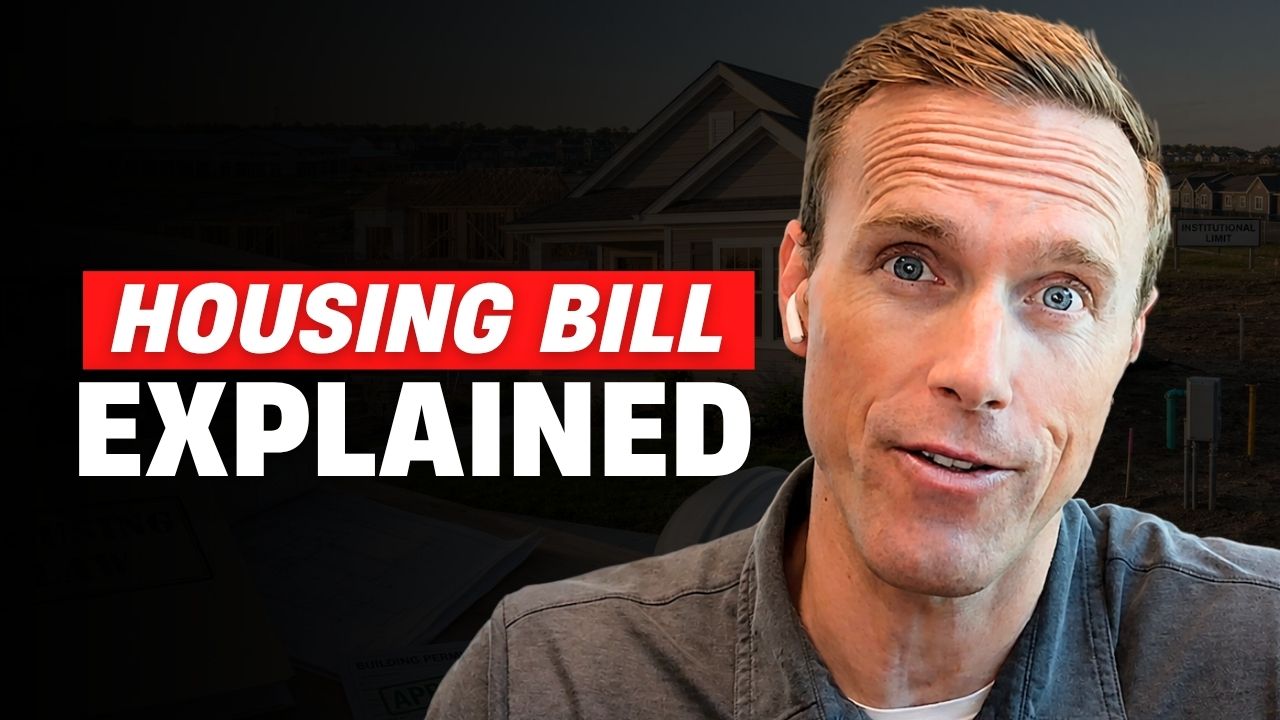
The 21st Century ROAD to Housing Act is now law. Here are the five points that actually matter, and the one change that could really move housing prices. The federal housing bill everyone has been talking about, the 21st Century ROAD to Housing Act, has now become law . When I recorded this video, it had passed Congress and was awaiting the president's action, and it has since taken effect without his signature. And there's a lot of misinformation out there about what it actually does. I'm a data guy. I want to cut through the noise and give you the five key points that actually matter, because I think this bill does some meaningful things, and it's worth understanding what's real and what's just politics. 1. Corporate ownership limits are mostly political. This is the provision that gets all the headlines. The bill limits large institutional investors from purchasing single-family homes once they own 350 or more. And look, it sounds good. But here's the reality. Corporate ownership of housing is less than 5% of the entire market. Over the last two years, institutional investors have largely stopped buying homes because interest rates are so high that rental income no longer justifies the investment. They bought a lot of homes during COVID, but right now it's no longer an issue. So in my opinion, the corporate ownership piece is purely a political move. It makes people feel better, but it doesn't address the problem driving up housing prices. 2. Modular and manufactured housing get a boost. This one is big and doesn't get enough attention. The bill loosens some of the restrictions on modular and manufactured housing. Previously, you needed a permanent foundation for a modular home to be considered a single-family residence. They're relaxing that requirement, which makes affordable, factory-built housing easier and cheaper to bring to market. That's a meaningful change. " The real fix for housing affordability has always been the same: make it easier and cheaper to build homes. " 3. States face pressure to build more. Here's the provision I think matters most. The bill puts pressure on states like California to loosen their building restrictions or risk losing federal funding. In my opinion, nationwide, this is the number one issue causing housing prices to go up. It's just too expensive, too hard, and takes too long to build homes. When builders have to spend so much money just to put a foundation in the ground, they can't build entry-level or mid-tier homes and make their money back. So they build higher-end homes instead. That's why we have an affordability crisis. It's not corporate investors. It's the cost and timeline of building. 4. Small-dollar mortgages get easier. Loans under $200,000 are going to become easier to obtain. Right now, many lenders don't want to make those loans because there's little profit in them. The federal government is easing some requirements and making it easier for buyers to access lower-cost financing. That's a real win for first-time buyers and buyers in more affordable markets who've been locked out of traditional lending. 5. New construction gets streamlined. If you want to build a development in California, the planning process can take 10 to 15 years. I've seen it firsthand. A big development in Folsom started planning 15 years ago. It took a decade just to get plans approved, do the environmental studies, and jump through all the hoops. If it takes you 10 to 15 years and you buy a piece of land to build on, the economy is completely different by the time you get a return. Very few people are willing to take that kind of risk. The bill aims to streamline and speed up that process, and if it actually reduces red tape, that's going to be fantastic over the next five years. That's where we'll start to see housing prices genuinely soften, especially in markets where inventory has been crunched for years. What it all means. In general, this law does a lot of good. The modular housing changes, the building pressure on states, the small-dollar mortgage access, and the construction streamlining are all meaningful. The corporate ownership provision is mostly window dressing. The real fix for housing affordability has always been the same: make it easier and cheaper to build homes. This bill takes some steps in that direction, and that's worth paying attention to. If you're thinking about buying or selling and you're wondering how any of this affects your situation, give me a call at (916) 862-5463 , email me at Steve@homesbyelevate.com , or visit homesbyelevate.com . I'd love to break down the numbers for you.
By Steve LaMothe July 10, 2026
Folsom sellers who improve their home before listing often capture far more profit than the repairs cost.
By Steve LaMothe June 18, 2026
New Right now, thousands of Folsom homeowners are typing the same question into Google: "What is my home worth?" And thousands more are on Reddit, Nextdoor, and real estate forums asking some version of: "Should I sell now, wait, fix it up first, or just take a cash offer and be done with it?"
Show More